 listicle
Best Marinated Grilled Meat for Dinner: 7 Cuts to Try
Table of Contents
- Why Marinating Makes or Breaks Grilled Meat
- The 7 Best Cuts of Marinated Grilled Meat for Dinner
- How Long to Marinate Steak for Grilling (and Other Meats)
- Marinating Meat Safety Guidelines Every Griller Should Know
- The Best BBQ Marinade for 2026: Flavor Trends Worth Trying
- Common Marinating Mistakes and How to Fix Them
- Internal Temperature Guide for Grilled Meat
- Conclusion
- Frequently Asked Questions
Last Updated: September 25, 2026
Why Marinating Makes or Breaks Grilled Meat
The best marinated grilled meat for dinner starts with one truth: marinade is not a finishing sauce but a working liquid that changes the meat before it touches the grate. At El Gordo's Grill, we build every grilled plate around that principle. (Source: guidelines from the U.S. Department of Agriculture (USDA))
Marinating means soaking meat in a seasoned liquid, usually an acidic base like balsamic vinegar or citrus, plus oil, salt, and aromatics, so the surface seasons and the fibers loosen.
A marinade does two jobs on different timelines. Salt and acid start working on the surface within 30 minutes; oil and dried herbs mostly sit on top, carrying flavor that caramelizes over high heat. Miss either job and the meat tastes flat no matter how good the cut was.
That is why a flank steak in a weak marinade can beat a ribeye with none at all. Below: the 7 best cuts, exact marinating times, safety rules, and the mistakes that ruin grill night.
The 7 Best Cuts of Marinated Grilled Meat for Dinner
The best cuts for marinating have enough surface area and structure to hold flavor: flank steak, chicken thighs, skirt steak, and pork tenderloin lead the list, followed by sirloin tip, chicken breast, and lamb shoulder chops.
Flank Steak: The Weeknight Workhorse
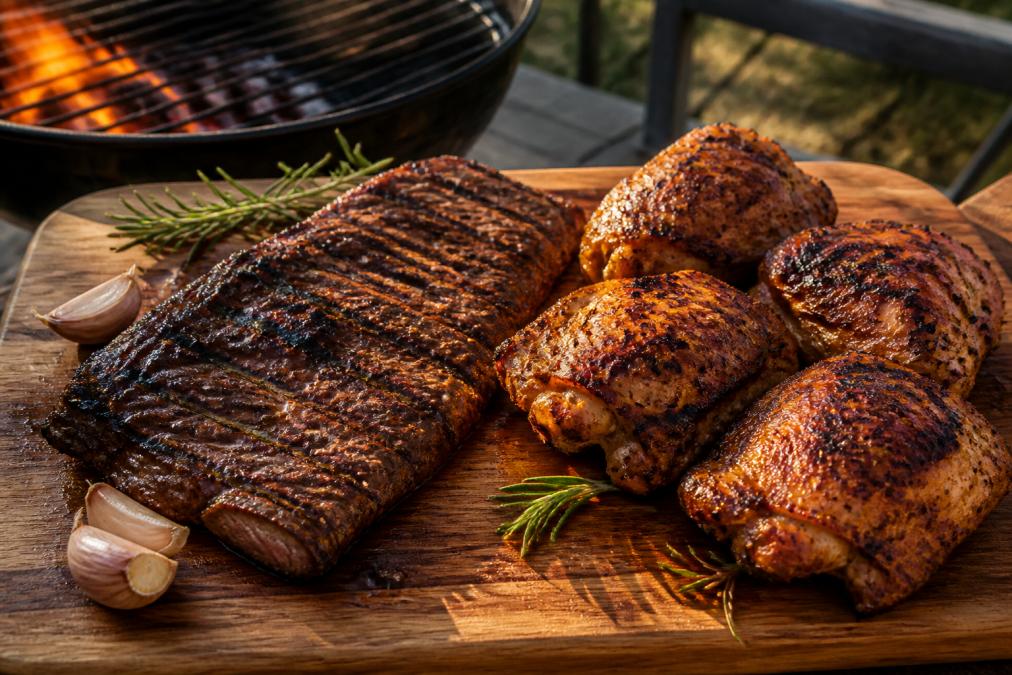
Flank steak is the best marinated grilled meat for a fast dinner: thin, quick to absorb flavor, and feeds a family. Its coarse grain and near-zero fat mean it turns tough fast without a marinade.
Chicken Thighs: Budget-Friendly and Forgiving
Chicken thighs are the most forgiving cut here: their fat keeps them juicy even if you overshoot the grilling time by a couple of minutes.
Skirt Steak and Pork Tenderloin: Fast, Flavorful Options
Skirt steak and pork tenderloin reward a shorter marinade and a hot, fast cook. Skirt steak is thinner and beefier than flank, so 1 to 2 hours in an acidic base is plenty; pork tenderloin is lean and mild, taking on whatever flavor you give it.
How Long to Marinate Steak for Grilling (and Other Meats)
Most steak cuts need 2 to 24 hours in the refrigerator, with 4 to 8 hours the sweet spot for flank and skirt. Thinner cuts sit at the short end, thicker at the long end, and past 24 hours the surface texture breaks down.
| Cut | Marinating Duration | Best Marinade Base |
|---|---|---|
| Flank steak | 2-4 hours | Soy sauce, olive oil, Worcestershire |
| Skirt steak | 1-2 hours | Worcestershire, olive oil, garlic |
| Chicken thighs | 4-8 hours | Balsamic vinegar, honey, Italian seasoning |
| Pork tenderloin | 2-6 hours | Honey, balsamic vinegar, dried herbs |
| Chicken breast | 30 min-2 hours | Olive oil, lemon, garlic powder |
| Sirloin tip | 4-12 hours | Soy sauce, olive oil, brown sugar |
| Lamb shoulder chops | 4-8 hours | Olive oil, lemon, dried herbs |
Marinating Meat Safety Guidelines Every Griller Should Know
Food safety around marinating comes down to two variables: temperature and cross-contamination. Get both right and the risk drops to near zero; get either wrong and a great cut becomes a grill-night illness.
A few rules worth taping inside a cabinet door:
- Use a ziplock bag or a glass dish. Reactive metal pans, aluminum, cast iron, unlined copper, can react with acidic marinades and leach metallic flavors into the meat.
- Keep a separate clean plate for cooked meat. Never return grilled meat to the plate or platter that held the raw cuts.
- Wash hands, tongs, and any surface that touched raw meat before handling anything else.
- Discard used marinade that sat with raw meat, or boil it for at least one minute if you plan to baste.
- Refrigerate within two hours of cooking. On a hot day above 90°F, cut that to one hour.
Dietary Modifications Most Marinade Guides Ignore
The standard soy-sauce-and-brown-sugar marinade is not the only option, for many home cooks it is not viable. Here is how to adapt the same flavor profiles to common dietary needs without losing depth.
The Best BBQ Marinade for 2026: Flavor Trends Worth Trying
- Umami stacking with fermented ingredients. Miso, fish sauce, anchovy paste, and Worcestershire deliver glutamates that amplify the meat's savory notes, a teaspoon of white miso in a soy-and-garlic marinade gives flank steak depth no amount of brown sugar can replicate.
- Citrus zest over citrus juice. Zest carries aromatic oils without the water and acid load of juice; swapping half the lemon juice for zest keeps the bright flavor while reducing over-tenderizing on a long soak.
- Chili-forward heat with fruit sweetness. Chipotle in adobo, gochujang, and harissa are replacing generic "BBQ rub" profiles, paired with a little honey, maple, or fruit jam to balance the burn. Keep sugar under about a tablespoon per pound so it caramelizes without scorching.
- Yogurt and buttermilk bases for poultry. Cultured dairy is mildly acidic and coats evenly, which is why it appears in so many grilled chicken thigh recipes: lactic acid tenderizes gently and dairy proteins help the surface brown.
A practical rule for building any marinade: roughly two parts fat, one part acid, and enough salt to taste like a well-seasoned soup. Add aromatics freely, they flavor the crust, not the interior, then match soak time to the cut, not your patience.
Common Marinating Mistakes and How to Fix Them
Most marinating mistakes trace back to time, temperature, or ratios, all easy to correct once you know what to look for.
- Marinating too long in acid: The surface turns mushy and chalky. Fix it by cutting the acid and adding salt instead for overnight soaks.
- Skipping the salt: Salt is what actually seasons the meat. A marinade without it just coats the surface.
- Using oil as the main ingredient: Oil carries flavor but does not penetrate. Keep it to about a third of the liquid.
- Marinating at room temperature: This is a food safety risk, not a shortcut. Always refrigerate.
- Not patting the meat dry: Wet meat steams instead of searing. Blot it with a paper towel before it hits the grate.
- Forgetting to rest the meat: Resting lets the juices redistribute. Skip it and they end up on the cutting board.
Internal Temperature Guide for Grilled Meat
The only reliable way to know grilled meat is done is an instant-read thermometer, not the clock, color and firmness vary too much between cuts and grill setups.
| Meat | Target Internal Temperature | Rest Time |
|---|---|---|
| Beef steak (medium rare) | 130-135°F | 5-10 minutes |
| Beef steak (medium) | 140-145°F | 5-10 minutes |
| Chicken (thighs and breast) | 165°F | 5 minutes |
| Pork tenderloin | 145°F | 3-5 minutes |
| Lamb shoulder chops | 145°F (medium rare) | 5 minutes |
Conclusion
Getting the best marinated grilled meat for dinner on the table means matching the cut to the marinade and the marinade to the clock: nail the duration, keep everything cold until it hits the grill, and pull by temperature instead of guesswork.
Frequently Asked Questions
What are the best meats to marinate for grilling?
Flank steak, skirt steak, chicken thighs, pork tenderloin, and beef tips all take well to marinades. Tougher, leaner cuts benefit most because the acidic base helps tenderize meat fibers and adds flavor. Flank and skirt steak absorb marinade quickly thanks to their loose grain, while chicken thighs stay juicy even if you grill them a few minutes too long. Avoid marinating delicate fish for more than 30 minutes, since the acid will break down the flesh.
How long should you marinate different types of meat?
For steak, 2 to 24 hours works well; flank and skirt steak hit peak flavor around 4 to 8 hours. Chicken thighs need at least 30 minutes but shine after 2 to 6 hours. Pork tenderloin does best with 2 to 12 hours. Seafood should stay in the marinade for 15 to 30 minutes only. If you are short on time, a 30-minute marinade with balsamic vinegar or lemon juice still adds noticeable flavor, especially on thinner cuts.
Can you over-marinate meat before grilling?
Yes. Leaving meat in a highly acidic marinade too long breaks down the surface texture and turns it mushy. Soy sauce, balsamic vinegar, and citrus juices are the main culprits. Stick to the upper limit for each cut: 24 hours for beef, 12 hours for pork, and 6 hours for chicken. If your marinade leans sweet from honey or brown sugar, keep it under 8 hours to avoid a sticky, burn-prone surface on the grill.
What is the secret to getting bold flavors in grilled meat?
Use a marinade with three components: an acidic base for tenderizing, oil to carry fat-soluble flavors, and a savory element like Worcestershire sauce or soy sauce for umami. Whisk the marinade until it emulsifies, then use a ziplock bag so every surface stays coated. Pat the meat dry before searing to encourage caramelization, and always let it rest 5 to 10 minutes after grilling so the juices redistribute instead of running out on the board.
How do you keep marinated meat safe during grilling?
Always marinate in the refrigerator, never on the counter. If you want to use leftover marinade as a sauce, boil it for at least 3 minutes first to kill bacteria. Use a separate plate and tongs for raw meat to avoid cross-contamination, and wash your hands after handling it. A meat thermometer is the only reliable way to confirm doneness: 145°F for beef and pork, 165°F for chicken.