 blog
blog
Best BBQ Marinade for 2026: Top Recipes & Tips
Table of Contents
- Essential Ingredients for the Best BBQ Marinade
- Top BBQ Marinade Recipes for Chicken, Pork, and Seafood
- How Long to Marinate Chicken for BBQ
- Marinating Meat Safety Guidelines
- Flavor Profiles and Dietary Variations
- Troubleshooting Common Marinade Failures
- Frequently Asked Questions
Last Updated: September 17, 2026
Essential Ingredients for the Best BBQ Marinade
The best BBQ marinade for 2026 balances three jobs: it seasons the meat, tenderizes the surface, and builds a crust worth photographing. Get those three right and everything else is preference. This guide from El Gordo's Grill breaks down the ingredients, the timings, and the mistakes that quietly ruin backyard barbecue.
Every great marinade starts with an acidic base. Balsamic vinegar, citrus juice, and Worcestershire sauce all do the same work: they break down surface proteins so seasonings travel deeper. Pair that acid with a fat, usually olive oil, and you get an emulsion that clings to meat instead of sliding off.
Then come the flavor builders. Soy sauce and molasses bring umami and depth. Smoked paprika, garlic powder, onion powder, and cayenne pepper handle the heat and the smoke. A little honey or brown sugar adds sweetness that caramelizes over the fire.
Salt matters more than any single spice. It penetrates meat over time, while most dried seasonings sit on the surface. If you only have 30 minutes, salt first and add aromatics later.
Top BBQ Marinade Recipes for Chicken, Pork, and Seafood
Different proteins need different treatment. A marinade that transforms chicken can overwhelm shrimp, and a pork marinade built for long, slow flavor will do nothing for a fillet that cooks in minutes. Below are three starting points, each tuned to how that protein actually behaves on a grill.
Chicken Marinade Recipes
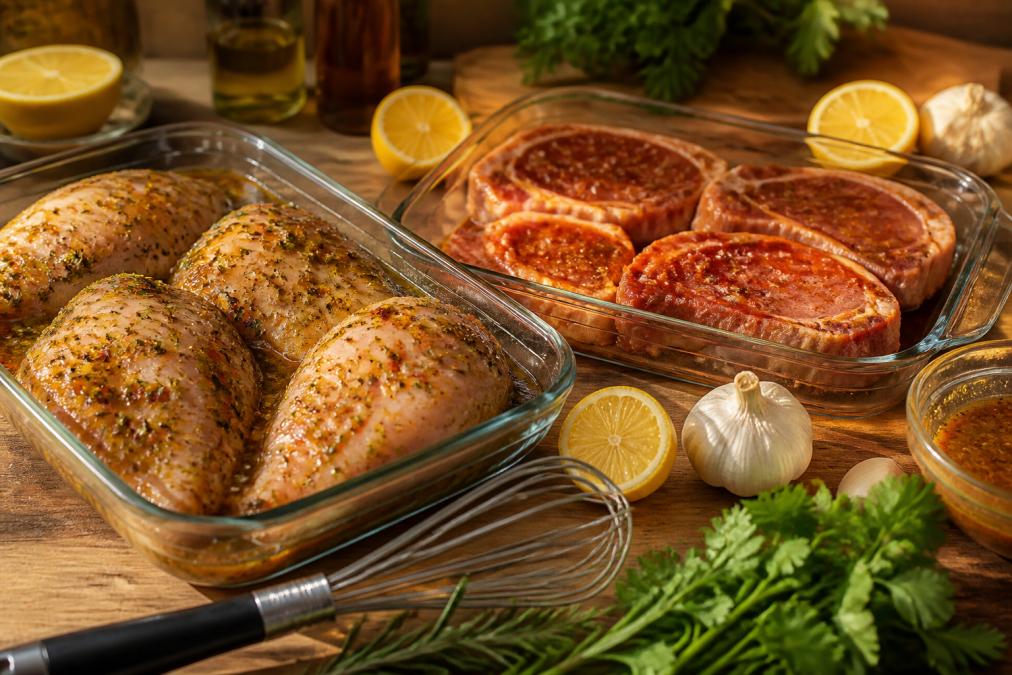
Chicken takes on flavor well but dries out fast, so the marinade needs fat and acid in equal measure. A reliable blend: olive oil, balsamic vinegar, soy sauce, garlic powder, smoked paprika, and a spoonful of honey. Whisk until it emulsifies, then coat the chicken and refrigerate. For a smoky profile, add a pinch of cayenne and a splash of Worcestershire.
Pork Marinade Recipes
Pork pairs beautifully with sweetness. Combine brown sugar, molasses, soy sauce, fresh ginger, and a little sesame oil. The sugar caramelizes on the grill, giving chops and ribs that dark, glossy char. Keep the heat moderate. Sugar burns quickly, so a screaming-hot grill works against you here.
Seafood Marinade Recipes
Seafood needs the lightest touch. Use olive oil, fresh lemon zest and juice, garlic, and a small amount of soy sauce. Skip heavy sugars entirely, since delicate fish and shrimp cook in minutes and never develop that caramelized crust. A short soak is all you need.
How Long to Marinate Chicken for BBQ
The answer depends on the cut, the acid strength, and how much connective tissue you are working through. Boneless breasts and thighs need 30 minutes to 2 hours. Bone-in pieces benefit from 4 to 12 hours in the refrigerator. Beyond that, the acid starts breaking down the surface texture and the meat turns mushy.
| Cut | Marinade Time | Refrigerate? |
|---|---|---|
| Boneless breast | 30 min - 2 hours | Yes |
| Boneless thigh | 1 - 4 hours | Yes |
| Bone-in pieces | 4 - 12 hours | Yes |
| Whole chicken | 12 - 24 hours | Yes |
Why the Times Differ: Acid Strength and Cut Thickness
Marinade timing is not a fixed rule, it is a function of how aggressively your acid attacks the surface proteins and how far it has to travel. A highly acidic marinade (straight lemon juice or vinegar at full strength) will tenderize a thin cut in 30 minutes but will turn a thick breast to mush in 4 hours. A milder acid (buttermilk, yogurt, or a diluted balsamic) works more slowly and tolerates longer soaks.
Thickness matters just as much. A 1-inch boneless breast has a high surface-to-volume ratio, so the marinade does most of its work in the first hour. A whole chicken or a bone-in thigh has more mass and more connective tissue, so it needs the longer end of the range to let salt and aromatics penetrate past the surface.
A practical rule most pitmasters use: the thinner the cut and the stronger the acid, the shorter the soak. If you are unsure, err on the short side, you can always add more flavor at the grill, but you cannot un-mushy a chicken breast.
Timing by Protein, Not Just Chicken
Chicken is not the only protein where timing matters. Here is how the same logic plays out across the grill:
- Pork chops and tenderloin: 2 to 8 hours. Pork is forgiving and benefits from a longer soak, especially with a sugar-based marinade that needs time to penetrate.
- Pork ribs: 8 to 24 hours. The bone and connective tissue slow penetration, so ribs reward an overnight marinade.
- Shrimp and scallops: 15 to 30 minutes. These are essentially all surface, so a long soak does nothing but make them rubbery.
- Firm fish (salmon, tuna, swordfish): 30 minutes to 1 hour. Enough time for flavor, not enough to break down the flake.
- Delicate fish (tilapia, cod, flounder): 15 to 30 minutes. Treat them like shrimp, short and gentle.
- Tough beef cuts (flank, skirt, chuck): 4 to 24 hours. These cuts have more connective tissue and tolerate, even benefit from, a longer acid soak.
- Tender beef cuts (ribeye, tenderloin): 1 to 4 hours. Long soaks here just waste time and risk a mushy surface.
The Salt-First Shortcut
If you only have 30 minutes, salt the meat first and let it sit for 15 minutes while you whisk the rest of the marinade. Salt penetrates faster than any spice or acid, so front-loading it gives you the deepest flavor in the shortest window. Add the acid and aromatics after the salt has had a head start.
A common mistake is marinating at room temperature to "speed things up." That does not speed anything up. It just gives bacteria a head start. Keep everything in the refrigerator, even for a 30-minute soak.
Marinating Meat Safety Guidelines
Food safety around marinades comes down to three rules, and they are not optional. First, always marinate in the refrigerator, never on the counter. Second, if you want to use leftover marinade as a sauce, boil it first to kill bacteria from the raw meat. Third, never reuse a marinade that has touched raw poultry or pork on cooked food.
Cross-contamination is the quiet risk. Use a dedicated dish or a sealed bag, keep it on a low shelf so nothing drips onto other food, and wash your hands and tools after handling raw meat.
Flavor Profiles and Dietary Variations
Not every guest eats the same way, and a good host plans for it. A single marinade recipe can usually be adapted without losing its character, but the adaptations that matter most are the ones most guides skip entirely.
The Three Core Flavor Profiles
For a smoky profile, lean on smoked paprika and a touch of liquid smoke. For sweet, use honey, brown sugar, or molasses. For tangy, push the balsamic vinegar and citrus. Most marinades land somewhere between two of these three. The balance matters more than the recipe: acid, fat, salt, and sweetness in roughly equal proportions will beat a complicated ingredient list every time.
Dietary-Specific Marinade Variations
This is where most BBQ guides stop at gluten-free and call it a day. Here is how to adapt a base marinade for the diets you are actually likely to cook for.
How to Adapt Without Losing Character
The trick to dietary swaps is to replace function, not just ingredient. Sugar adds sweetness and browning, replace it with something that does both (allulose, honey, or maple). Soy adds salt and umami, replace it with something that does both (tamari, coconut aminos, or a splash of fish sauce). Acid adds tang and tenderizes, replace it with another acid of similar strength (lemon for vinegar, or vice versa).
Troubleshooting Common Marinade Failures
Most marinade problems trace back to one of five causes. Here is how to fix each.
- Meat tastes bland: you probably skipped salt or marinated too briefly. Salt penetrates; spices mostly sit on top.
- Meat is mushy: too much acid for too long. Cut the time in half next round.
- Marinade burns on the grill: too much sugar at high heat. Lower the temperature or move the meat to indirect heat.
- Flavor is one-note: you used only one acid and one spice. Layer at least three aromatics.
- Sauce tastes raw: you used the marinade straight from the bag. Boil it first.
Frequently Asked Questions
What is the best marinade for BBQ?
The best BBQ marinade balances acid, oil, and seasonings. A classic mix includes olive oil, soy sauce, balsamic vinegar, garlic powder, and smoked paprika. For chicken, add honey and lime juice; for pork, try molasses and Worcestershire sauce. Adjust to your taste and always marinate under refrigeration.
How long should you marinate meat for the best flavor?
Marinating time varies: chicken 2-12 hours, pork 4-24 hours, seafood 15-30 minutes. Longer isn't always better; acidic marinades can break down meat if left too long. Always refrigerate during marinating and discard used marinade.
Can you reuse BBQ marinade after it touches raw meat?
No, never reuse marinade that has contacted raw meat unless you boil it first. Harmful bacteria can multiply. Instead, set aside a portion before adding meat to use as a sauce. This simple step keeps your BBQ safe and flavorful.
Are store-bought marinades as good as homemade?
Store-bought marinades offer convenience, and homemade allows for customization. For a quick fix, enhance a store-bought base with fresh garlic, ginger, or citrus zest.