 how-to
Ordering Dinner for Large Families: A Stress-Free Guide
Table of Contents
- Start With a Headcount and a Plan
- How to Calculate Food Per Person for Catering
- Catering, Takeout, or Delivery: Which Fits Your Group?
- How to Manage Dietary Restrictions for Large Groups
- Tips for Transporting Large Takeout Orders
- Waste, Storage, and Tipping: What Most Guides Skip
- Conclusion: Feed the Crowd Without the Chaos
- Frequently Asked Questions
Last Updated: October 2, 2026
Start With a Headcount and a Plan
Ordering dinner for large families starts with one number: how many people are actually eating. Get that wrong and every other decision falls apart.
So before you open a menu, do this:
- Count adults and kids separately
- Flag the big eaters in the group
- Note anyone with food allergies or dietary restrictions
- Pick your pickup or delivery window
- Set a rough budget per head
Count Adults, Kids, and Big Eaters Separately
A headcount is not one number. It is three.
Adults eat more than kids, teens often eat like adults, and every family has someone who goes back for thirds. Count everyone the same and you will order too little for adults and too much for kids.
A simple way to do it:
- Kids under 10: count as half a portion
- Teens and adults: count as one full portion
- Known big eaters: count as one and a half portions
For a family of five with two young kids and one teen, that math lands closer to four full portions than five. That difference matters when you are paying per head.
How to Calculate Food Per Person for Catering
The standard rule for catering is 1 to 1.5 pounds of food per person for a full meal, covering a main course, sides, and a buffer for seconds.
Use the low end for lighter eaters and the high end for hearty ones, office workers eating lunch eat less than teenagers after a game.
Break it down by course:
| Course | Amount Per Person | Notes |
|---|---|---|
| Main course (grilled meat) | 6-8 oz | More for big eaters |
| Side dishes | 4-6 oz total | Two sides minimum |
| Appetizers | 2-3 pieces | Skip if the meal is heavy |
| Beverages | 2 drinks | More in hot weather |
Portion control gets easier family-style: shared platters let people take what they want.
For a deeper look at standard serving sizes, the USDA dietary guidelines offer a solid baseline for planning meals.
Catering, Takeout, or Delivery: Which Fits Your Group?
Takeout wins for most large families: it costs less than full-service catering, gives you full menu control, and skips the delivery fees and service charges that stack up on big orders.
| Option | Best For | Typical Lead Time | Watch Out For |
|---|---|---|---|
| Takeout | Most family dinners, budget control | 1-3 days for 15+ people | You handle transport, setup, and cleanup |
| Catering | Formal events, no cleanup wanted | 1-2 weeks, longer for holidays | Per-head pricing, minimum headcounts, service charges |
| Delivery | Small groups, no car available | Same day, but call ahead for 15+ | Fees, gratuity, limited vehicle capacity |
Catering pricing usually works per head, not per tray. Most caterers quote a per-person rate with a minimum headcount, then add an 18-22% service charge and sometimes a staff fee.
Delivery has a capacity ceiling. A standard sedan holds roughly 10-15 foil trays stacked flat, and a single driver often cannot.
Use a Shared Cart Instead of a Group Chat
Most large-family orders go sideways when preferences are collected over text and the order is placed from memory. Most major delivery platforms support a shared cart or group order link: you start the cart, send one link, and each person adds their own items and notes their restrictions.
A few practical rules make shared carts work:
- Set a hard deadline for additions, usually 2 hours before you plan to order
- Lock the cart before checkout so no one adds a last-minute item after you pay
- Ask each person to put allergies in the item notes, not in the chat
- Screenshot the final cart before you submit, in case the restaurant calls with a question
If the restaurant lacks a shared cart, a shared note or spreadsheet still beats a group chat. The point is one source of truth.
Tipping on Large Orders
Gratuity is where large-order hosts get surprised most. The rules differ by order type.
- Catering: Check the contract first. Many caterers build an 18-22% service charge into the quote. If it is already there, you are not expected to tip on top, though a cash tip for on-site staff is always appreciated.
- Delivery: Tip the driver on the total, not the per-person cost. For a large order that required multiple trips or extra loading time, 15-20% is a common range, and more if the driver had to carry everything up stairs.
- Large takeout: No service charge usually means no obligation, but 10-15% is a fair gesture for an order that took extra kitchen time to assemble. If an automatic gratuity already appears on the receipt, do not double-tip.
When in doubt, ask: "Is gratuity already included on this order?"
For a weekend feast at home, takeout plus a shared cart is the cost-effective pick: pre-order, set a pickup window, and drive it home yourself.
How to Manage Dietary Restrictions for Large Groups
Managing dietary restrictions for large groups comes down to one move: collect the info before you order, not at the table. Ask every guest about allergies and dietary needs when you send the invite, then sort people into groups:
- No restrictions
- Vegetarian or vegan
- Gluten-free
- Allergies (nuts, shellfish, dairy, and so on)
Then build your menu around the biggest group and add one or two dishes that cover the rest, variety that works for everyone, not a separate meal per person. Spell out every restriction clearly and ask the restaurant to label containers for big groups; one mislabeled tray can ruin a meal for someone with a serious allergy.
The FDA food allergy guidance is worth a read if you are hosting and want to get the details right.
Tips for Transporting Large Takeout Orders
Transporting large takeout orders is where good planning falls apart: hot food cools fast, foil trays slide, sauces leak. A few habits keep everything intact.
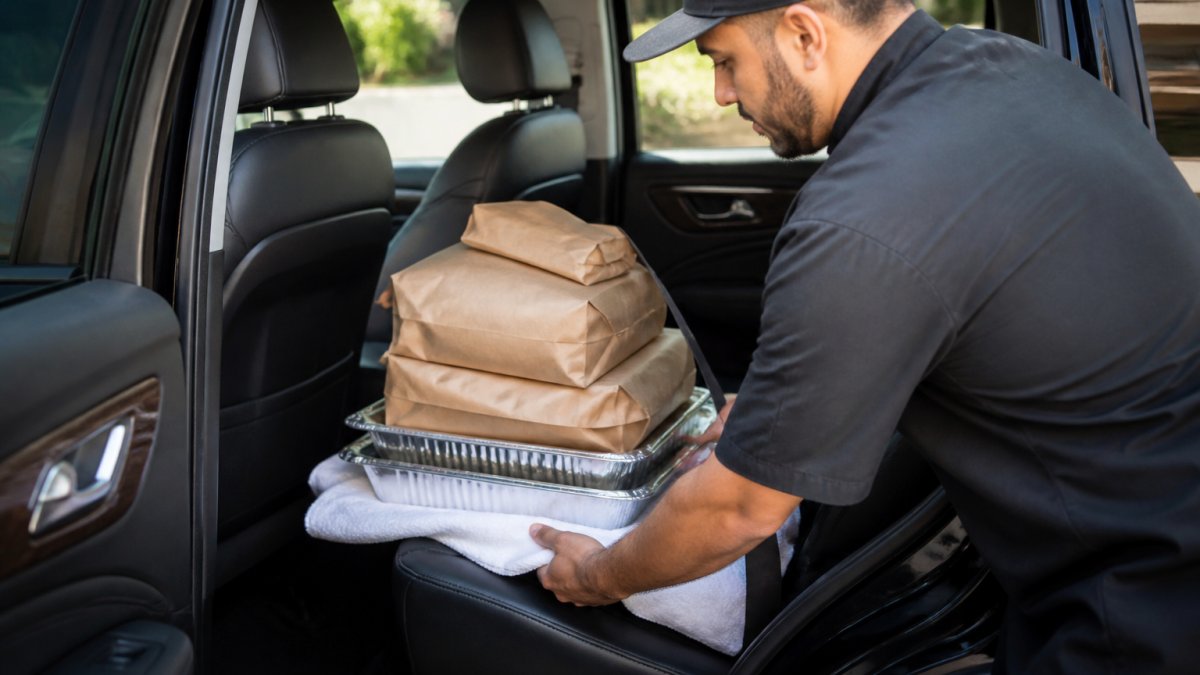
Start with the car. Clear the trunk or back seat before you leave. Flat surfaces beat seats every time.
Then pack smart:
- Put heavy trays on the floor or trunk floor
- Stack lighter items on top, never the reverse
- Use towels or a cooler bag to hold heat
- Keep cold items separate from hot ones
- Secure drinks in a box or carrier
Temperature control is the part most people skip. Hot food should stay above 140°F and cold food below 40°F to stay safe, per USDA food safety guidelines. A cooler bag and a quick drive handle both.
Drive straight home. Every stop adds minutes, and minutes add up to cold food.
Waste, Storage, and Tipping: What Most Guides Skip
Most guides stop at the menu. The real work starts after the food arrives: storing it safely, reheating it without drying it out, and keeping packaging out of the landfill.
Storage: The Two-Hour Rule and What Comes After
The clock starts when the food comes out of the hot holding unit, not when you get home. Per USDA food safety guidelines, perishable food should not sit in the temperature danger zone, between 40°F and 140°F, for more than two hours total. For a large order, that window is tighter than it sounds: pickup time, drive time, and serving time all count.
A few habits make storage manageable:
- Move leftovers into shallow containers within two hours of pickup. Shallow containers cool faster than deep ones, which matters when you are chilling 10 pounds of food at once.
- Divide large trays into smaller portions before refrigerating. A single deep foil tray of meat can take hours to cool to a safe temperature in the center.
- Label each container with the date. Most cooked meats keep 3-4 days in the fridge; cooked rice and pasta are closer to 3 days.
- Freeze what you will not eat within four days. Grilled meats, stews, and casseroles freeze well; fried foods and crisp sides do not.
Reheating Without Ruining the Food
Reheating a big order is where texture goes wrong, a microwave blast turns grilled meat rubbery and bread soggy. Better approaches:
- Grilled or roasted meats: Reheat covered in a 300-325°F oven until the internal temperature reaches 165°F. Add a splash of broth or sauce to keep moisture in.
- Rice and pasta: Reheat in a covered pan on the stovetop with a tablespoon of water per cup, or in the microwave covered. Stir halfway through.
- Breads and tortillas: A quick pass in a dry skillet or a few seconds per side over a gas flame beats the microwave every time.
- Sauces and soups: Reheat on the stovetop, stirring, until they simmer. Never reheat a sauce more than once.
A food thermometer is the only reliable way to know reheated food is safe. Aim for 165°F throughout.
Cutting Waste Before It Happens
Waste is the quiet cost of over-ordering, showing up on the receipt and in the trash. A few habits cut it down:
- Order to your headcount, not above it. The 1 to 1.5 pounds per person rule already includes a buffer.
- Skip dishes nobody ate last time. Track what came home untouched and drop it from the next order.
- Send guests home with containers. Ask them to bring their own if you want to avoid buying more.
- Compost what you cannot save. Meat, dairy, and cooked vegetables can go in most municipal compost programs; check your local rules first.
Eco-Friendly Packaging: What to Ask For
A large takeout order can generate a surprising amount of plastic, clamshells, cutlery, condiment packets, bags. One question at order time cuts most of it.
- Ask for compostable or recyclable containers. Many restaurants now stock fiber-based clamshells or recyclable aluminum trays. Not all do, but asking signals demand.
- Skip disposable cutlery and napkins if you are eating at home. You already have forks.
- Request condiments in bulk instead of individual packets. One large container of sauce beats 20 tiny ones.
- Bring your own bags for pickup if the restaurant allows it. Some do, some do not, ask when you call.
- Reuse what you can. Sturdy foil trays and lidded containers can be washed and reused for storage or future potlucks.
Sustainability is not all-or-nothing. One or two habits per order adds up across a season of family dinners, and asking costs nothing.
Conclusion: Feed the Crowd Without the Chaos
Feeding a big group does not have to be stressful: count your headcount, do the portion math, pick the right order type, handle dietary needs up front, and pack the car before you leave.
Our locally sourced ingredients, signature secret marinade, and takeout-focused setup mean your weekend feast arrives hot and ready to serve.
Get started with El Gordo's Grill and feed your crowd without the chaos.
Frequently Asked Questions
How do you calculate how much food to order for a large group?
Start with a headcount, then assign portions by appetite. For grilled meats, plan 6 to 8 ounces per adult and 3 to 4 ounces per child. Add 2 to 3 side dishes per person and 1 to 2 appetizers each. If your group skews toward big eaters, round up by 10 to 15 percent. Ordering family-style trays rather than individual meals makes it easier to adjust portions on the fly.
Is it cheaper to order family-style trays or individual meals?
Family-style trays usually cost less per person because you are buying bulk portions instead of individually packaged plates. They also cut down on packaging waste and let picky eaters take what they want. The trade-off is less control over exact portions, so order one tray more than you think you need if your group has hearty appetites. Check with the restaurant for current tray pricing and sizes.
How can I keep takeout food warm for a large family dinner?
Bring a cooler or insulated bag with you for pickup. Ask the restaurant to pack hot items separately from cold sides, and keep lids sealed until serving. For grilled meats, wrap trays in a clean towel and place them in the cooler without ice. Most cooked food stays safely warm for about an hour. If the drive is longer than 30 minutes, reheat in a 300°F oven for 10 to 15 minutes before serving.
What should I consider when ordering for picky eaters in a large family?
Build the order around a few crowd-pleasing mains, then add sides that appeal to different tastes. Plain grilled chicken or brisket works for most palates, while sauces and toppings go on the side so people can customize. Ask about dietary restrictions ahead of time and confirm the restaurant can handle food allergies. A menu with variety, not novelty, keeps everyone fed without complaints.