 how-to
Tips for Picking Up Takeout Dinner: 2026 Guide
Table of Contents
- Order Ahead: Timing Your Takeout Dinner Pickup Right
- Takeout Order Checklist: What to Confirm Before You Leave
- How to Keep Takeout Warm on the Drive Home
- How to Serve Takeout Family Style Without the Mess
- Dietary Needs, Allergies, and Customization at Pickup
- How Much to Tip for Takeout (and When)
- Frequently Asked Questions
Last Updated: October 6, 2026
Order Ahead: Timing Your Takeout Dinner Pickup Right
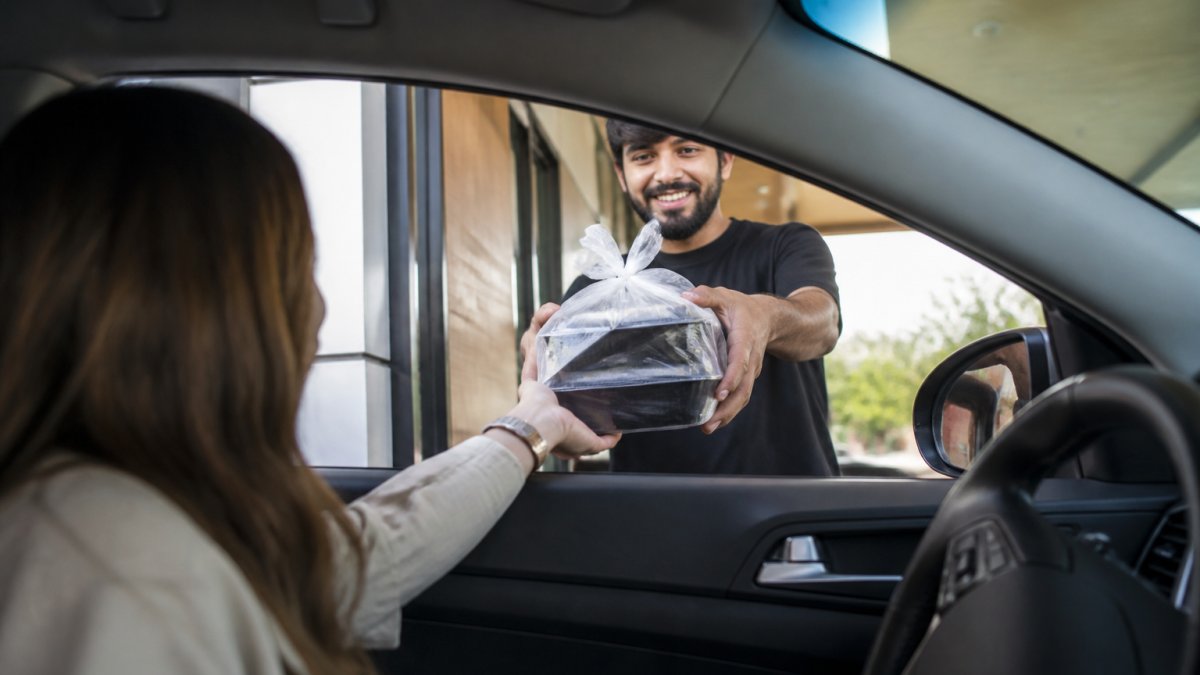
Ordering ahead is the single biggest thing you can do to make takeout dinner pickup smooth. At El Gordo's Grill, we aim for a smooth pickup experience. The ones who call it in before they leave the office always beat the ones who order at the counter.
Here's the reality: grilled meats need time. A good marinade, a hot grill, a proper rest before packaging. That's not a delay, that's the process. So the smart move is to order while you're still at your desk, not while you're sitting in the parking lot.
How far ahead should you order? For most grilled meat plates, 20 to 30 minutes is the sweet spot. Call too early and your food sits under a heat lamp. Call too late and you're waiting.
A few timing rules we've learned:
- Order before you leave work, not after you arrive
- Ask for a pickup time, not just "as soon as possible"
- Add 10 minutes on Friday and Saturday nights
- Call back if you're running late so we can time the grill
The goal is simple: your food comes off the grill right as you walk in. That's when it tastes best.
Takeout Order Checklist: What to Confirm Before You Leave
Most takeout problems aren't cooking problems, they're packing and handoff problems. A missing side, a sauce that never made it into the bag, or a customization that got lost between the order screen and the kitchen can turn a good dinner into a second trip. The fix is a 30-second check at the counter before you drive off.
Run through this list every time:
- Count the main dishes against your receipt, not against your memory
- Confirm every side, upgrade, and add-on you paid for
- Check that sauces, salsas, dressings, and dips are in the bag
- Make sure cold drinks and desserts are bagged separately from hot food
- Ask if anything needs to stay upright (soups, drinks with loose lids, sauced items)
- Grab napkins, utensils, straws, and extra lids if you need them
- Lift the bag from the bottom to check for leaks before you walk out
- Confirm the receipt total matches what you were charged
Verify Customizations Out Loud
Customizations are where most errors hide. "No onions," "sauce on the side," "extra spicy," "gluten-free bun", these instructions travel through a screen, a printer, and a busy line cook. Ask the person at the counter to read your order back to you, especially the modifications. It feels small, but it catches the mistakes a rushed kitchen makes during a Friday-night rush.
If you have an allergy, do not rely on the order screen alone. State it clearly at pickup and ask how the kitchen handles cross-contact. A restaurant that can't answer that question honestly is telling you something useful.
What to Do When Something Is Wrong
Check the bag before you leave the parking lot, not after you get home. If an item is missing or wrong, you have two options:
- Ask them to fix it now. Most kitchens will remake a missing side or a wrong entree on the spot, especially if you're still at the counter. This is almost always faster than driving back.
- Call from the car if you've already pulled away. Give them the order number and the specific problem. Many restaurants will note your account for a credit or a remake on your next visit.
What you should not do is open the containers and start eating in the car. Once food is out of the bag and partially eaten, most restaurants have no way to verify what was missing.
Keep the Receipt
Hold onto the receipt until you've eaten. If something was wrong, the receipt is your proof of what you ordered and what you paid. A photo of the receipt on your phone works just as well and won't get greasy.
How to Keep Takeout Warm on the Drive Home
Heat loss is the enemy of good takeout, but so is trapped moisture. A grilled dinner can drop from hot to lukewarm in 15 minutes if it's loose on the back seat, and a crispy item sealed tight with a saucy one turns soggy in about the same time. The fix is simple: insulate, separate, and drive straight home.
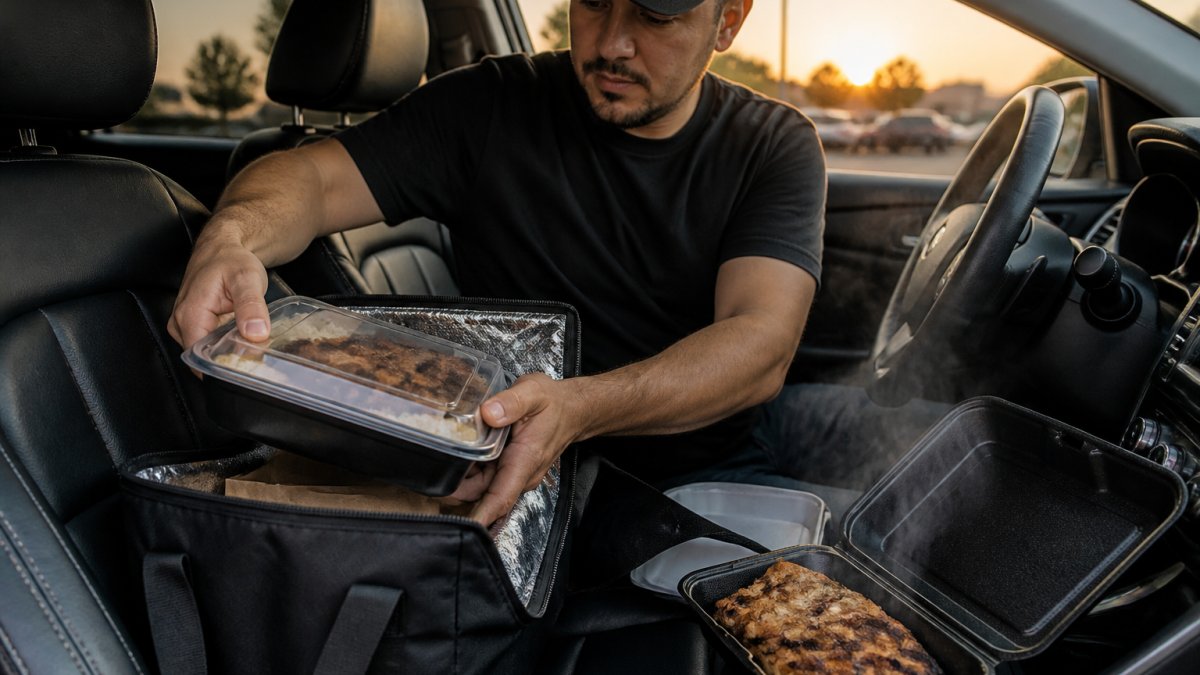
Here's what actually works:
- Bring an insulated bag. Even a basic one holds heat far better than a bare box. If you order takeout regularly, keep a folded bag in the trunk so you never forget it.
- Keep food on the floor or seat, not the trunk. Trunks get cold fast in winter and hot fast in summer, neither is good for food.
- Don't open the containers to peek. Every time you lift a lid, you release steam and heat. Wait until you're home.
- Skip the detour. Every extra stop costs you degrees. If you need gas or groceries, do it before you pick up the food, not after.
- Aim for a 15-minute drive. That's the practical window where most hot food still tastes like it just came off the line. Beyond 30 minutes, quality drops fast no matter how good your bag is.
The Hot and Cold Rule
Keeping food out of the "Danger Zone" (between 40°F and 140°F) is crucial for food safety. Bacteria multiply fastest in that range, so the goal is to keep hot food above 140°F and cold food below 40°F for as long as possible. In practice, that means:
- Hot entrees and sides go in one insulated bag
- Cold items, salads, desserts, drinks, dairy-based sauces, go in a separate bag or a cooler
- Never stack a cold drink on top of a hot container; the heat transfers both ways
- If your drive is longer than 30 minutes, consider a cooler for cold items and a second insulated bag for hot ones
If you're not eating within two hours of pickup, refrigerate the food. This is a common food-safety benchmark, and it matters more on warm days.
Packaging That Protects Temperature and Texture
Good packaging does two jobs: it holds heat and it keeps texture intact. A crispy item sealed tight with a saucy one turns soggy. That's why grilled meats and sides are usually packed in separate containers, and why fried items need venting while saucy items need sealing.
When you get home, open vented containers right away so steam can escape. Leave sealed containers closed until you're ready to plate. The texture rule is simple: keep dry things dry and hot things hot. Do that and your takeout dinner tastes close to what it did on the grill.
How to Serve Takeout Family Style Without the Mess
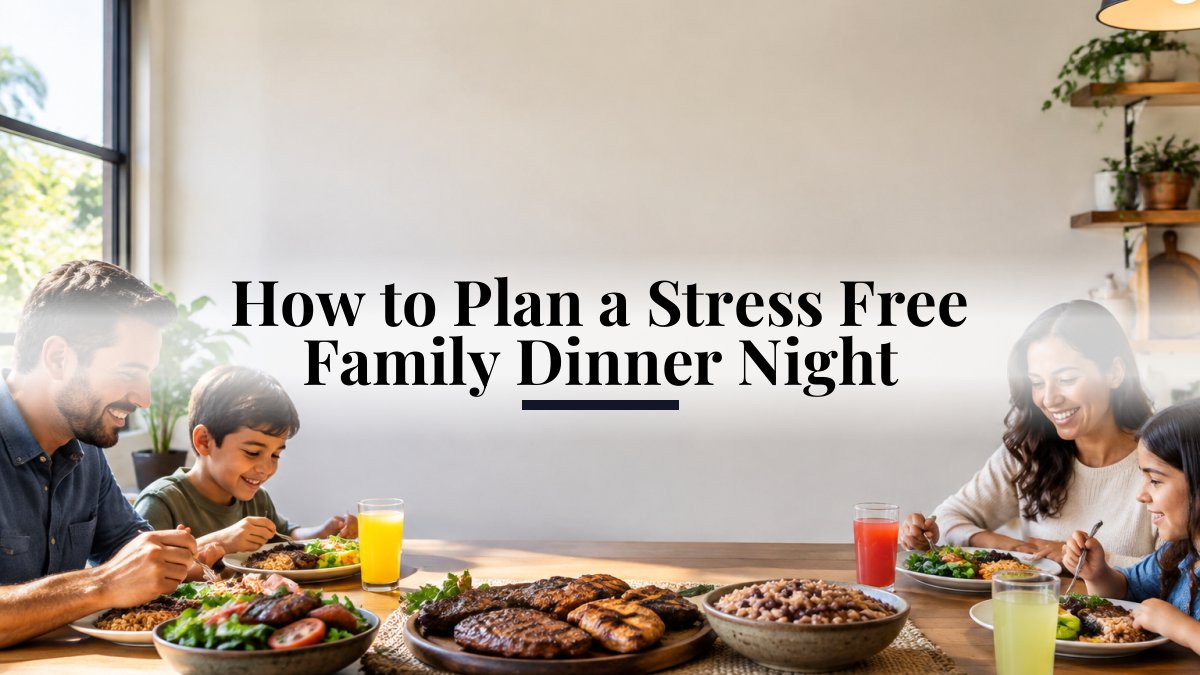
Family-style takeout is all about the setup. Empty the bags, spread the containers out, and let everyone build their own plate. It takes five minutes and turns a pile of boxes into a real dinner.
A quick system that works:
- Clear the table and lay down a mat or paper
- Open all containers and set them in the middle
- Put sauces and salsas in small bowls
- Hand out plates and let people serve themselves
- Keep a trash bowl on the table for scraps
For a family of five, order a few large mains plus several sides instead of five single plates. It's cheaper per person, and there's usually enough for seconds.
Dietary Needs, Allergies, and Customization at Pickup
Customization is where takeout gets tricky, so confirm it out loud at pickup. If you have an allergy, don't just trust the order screen. Tell the person handing you the bag.
A few things to always confirm:
- No dairy, no nuts, or no gluten, stated clearly
- Sauces on the side if you're unsure about ingredients
- Grilled plain if you want to skip the marinade
- Separate containers to avoid cross-contact
If a dish can't be made safe for your needs, ask. For serious allergies, calling ahead allows the kitchen to plan accordingly.
How Much to Tip for Takeout (and When)
Takeout tipping is not the same as dine-in tipping, and that's fine. A common approach is 10% for a simple counter pickup and 15% to 20% for large or complex orders.
Here's a simple guide:
| Order Type | Typical Tip | Why |
|---|---|---|
| Small pickup, one or two items | 10% | Quick handoff |
| Large family order | 15% to 20% | More packing and checking |
| Curbside or contactless | 15% | Staff runs it out to you |
| Custom or allergy order | 15% to 20% | Extra care in the kitchen |
| Counter service, no help | Optional | You did the work |
Cash tips go directly to the crew. For card tips, policies can vary, so you may inquire if you want to be sure. There's no rule that says you must tip on takeout, but it's noticed, and it's appreciated.
Frequently Asked Questions
How can I keep takeout hot on the way home?
Bring an insulated bag and put it on the floor or passenger seat, not the trunk, where heat escapes fastest. Ask the restaurant to pack hot items separately from cold sides and sauces. Keep lids closed until you're ready to eat; every peek releases steam. If your drive is longer, consider dishes that hold heat well, like grilled meats and roasted vegetables, over fried items that soften quickly.
What should I check before leaving with a takeout order?
Open the bag at the counter and confirm every item against your receipt, especially sides, sauces, and drinks, which are the most commonly missed. Check that containers are sealed and not leaking, that hot and cold items are separated, and that any allergy-related requests were noted. If something is missing, it's far easier to fix before you drive away than to call back from home. A 30-second check saves a second trip.
How do I keep takeout from getting soggy?
Sogginess comes from trapped steam. Ask for sauces and dressings on the side, and leave lids slightly cracked on fried or crispy items during the drive so moisture can escape. Keep cold items like salads and slaws in a separate bag from hot food. At home, transfer anything crispy to a plate or sheet pan instead of letting it sit in the closed container. Grilled meats and dry-rubbed dishes resist sogginess far better than breaded or sauced items.
How much should I tip for takeout?
For a simple counter pickup where you grab a bag and go, 10% is a common baseline. Bump it to 15-20% when staff assemble a large family order, handle special requests or allergies, or bring the food to your car. Tipping is optional and always appreciated, but it's a straightforward way to recognize extra effort. Cash tips at pickup are always welcome.
A great takeout dinner comes down to timing, a quick order check, and keeping the food hot on the way home. At El Gordo's Grill, we build our takeout around locally sourced ingredients, our signature secret marinade, and grilled meats cooked to order, so your dinner is ready when you are. Order ahead, grab an insulated bag, and taste the difference. Get started with El Gordo's Grill and make your next takeout dinner the easy part of your day.