 how-to
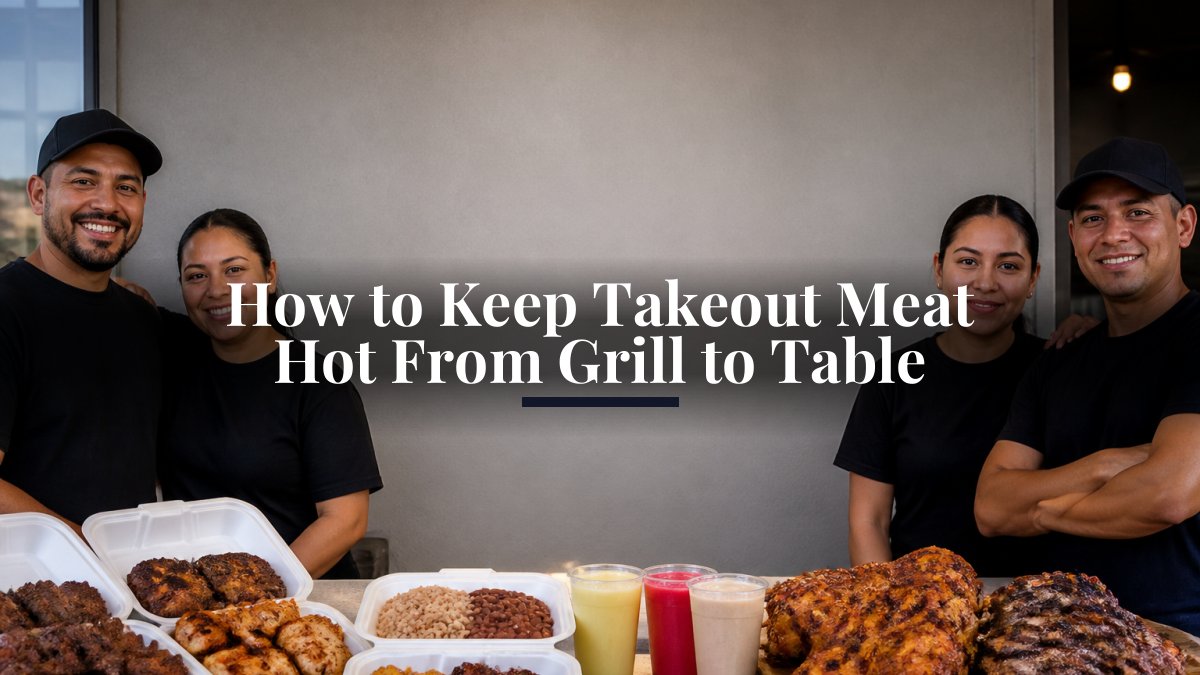
How to Keep Takeout Meat Hot From Grill to Table
Last Updated: October 26, 2026
Quick Summary
To keep takeout meat hot, seal the lid, wrap the container in a towel or insulated bag, and move fast. Hold grilled meat in a low oven at 200°F to 250°F for delays, and never let takeout meat sit out longer than two hours.
- Hot food should stay at or above 140°F to hold safely.
- Vent crispy items for 60 seconds, then seal and wrap for warmth.
- Keep cold drinks and sides in a separate bag from hot containers.
- Past two hours, refrigerate what you will eat later and reheat to 165°F.
- Reheat covered at a low setting until the internal temperature hits 165°F.
Table of Contents
- Why Takeout Meat Cools Fast and What to Do First
- How to Keep Food Warm in a Takeout Container
- How to Keep Grilled Meat Warm Without Drying It Out
- How Long Can Cooked Meat Sit Out Before It's Unsafe?
- How to Reheat Takeout Meat So It Stays Tender
- Ordering Takeout That Arrives Hot From El Gordo's Grill
- Frequently Asked Questions
Why Takeout Meat Cools Fast and What to Do First
Grilled meat loses heat faster than most people expect. The surface of a hot steak or chicken thigh starts shedding warmth the moment it leaves the grill, and a standard takeout container offers little resistance.
What happens next is partly on the trip home. Here is the short version: move fast, trap the heat, and never let meat sit in the danger zone.
The Two-Hour Rule and Safe Hot-Holding Temperatures
The two-hour rule is the basic food-safety guideline: cooked food should not sit at room temperature for more than two hours. After that, bacteria can multiply to levels that make food unsafe.
Hot food should stay at or above 140°F to hold safely. Cooked meat and poultry should reach a safe internal temperature when reheated, with 165°F as the standard target for leftovers.
Watch out: guessing by touch is the most common mistake. A container that feels warm on the outside tells you nothing about the meat inside.
How to Keep Food Warm in a Takeout Container
The best way to keep food warm in a takeout container is to reduce exposed surface area, add a layer of insulation, and keep the lid sealed until serving, but takeout packaging throws a few curveballs that a home casserole dish does not. Here is how to handle the containers you actually get handed at the counter.
Work with the packaging you were given
- Keep the original lid on. Clamshells, foil pans, and paperboard boxes are designed to vent a little steam; swapping them for a tight home container usually costs more heat than it saves.
- Vent crispy items for 60 seconds, then seal. Fried chicken, wings, and anything breaded release steam that softens crust. Crack the lid for about a minute, then close it and wrap.
- Double up foil pans. A second foil pan nested underneath adds an insulating air gap and catches drips so sauces do not leak through the bag.
The three moves that do most of the work
- Cover it tight. Foil or a snug lid traps heat and helps retain moisture.
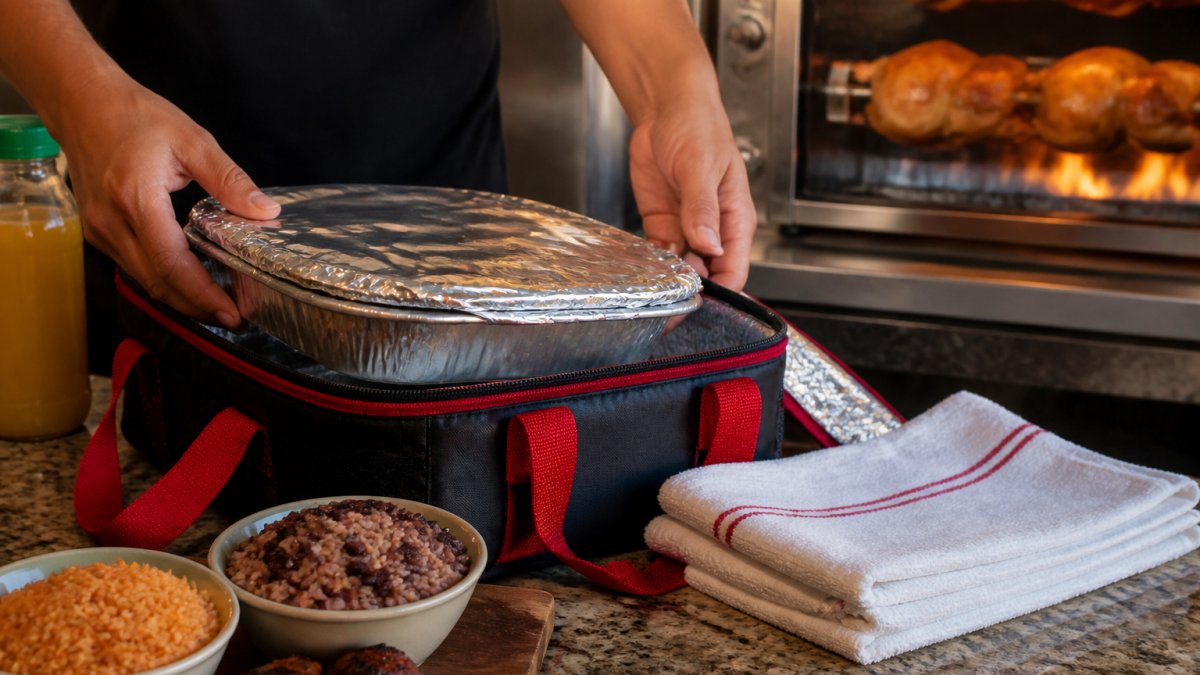
- Wrap it up. A towel or insulated bag around the container slows heat loss during transport.
- Skip the open air. Don't uncover the food until you're ready to eat.
For a deeper walkthrough of container and holding methods, see our guide on how to keep takeout food hot.
How to Keep Grilled Meat Warm Without Drying It Out
The trick to keeping grilled meat warm is gentle, indirect heat, never a hot pan or a blast of direct flame. High heat keeps cooking the meat and pulls out moisture, which is how a perfect piece of grilled chicken turns to sawdust on the drive home. The second trick is matching the method to the meat, because a sauced thigh and a seared steak fail in opposite ways.
Match the method to the meat
- Sauced or glazed meat (barbecue, mojo, sweet glazes): hold covered at low heat and keep it slightly vented. Sugar in the sauce steams and can turn the crust sticky; a paper towel under the lid absorbs excess moisture.
- Fried or breaded meat: insulation only, no added heat. A 200°F oven destroys crust in minutes. Wrap in paper first (not foil) to let steam escape, then insulate.
- Steak and thick cuts: rest, then hold wrapped in foil at the lowest possible warmth. Carryover cooking continues for several minutes after the grill, so pull it slightly under your target and let the wrap finish the job.
A practical home-to-table timeline
Use this to decide whether to hold, eat, or refrigerate:
- 0-15 minutes (the drive): insulated bag or cooler, lid sealed, cold drinks in a separate bag. This is the easy window, almost nothing goes wrong.
- 15-45 minutes (a delay): move meat to a preheated ceramic dish or stoneware platter, cover with foil, and hold in a low oven at 200°F to 250°F. Check with a food thermometer, you want the meat at or above 140°F, not climbing.
- 45 minutes to 2 hours: keep it in the low oven or a clean cooler used as an insulated container for thermal retention. This is the outer edge of the two-hour rule; plan to eat, not to keep holding.
The methods, ranked by how much texture they protect
- Insulated bag or cooler, best for short trips; zero added heat, so nothing overcooks.
- Preheated dish plus foil, best for serving soon; holds heat without a heat source.
- Low oven at 200°F to 250°F, best for a 30-60 minute delay; requires a thermometer check.
- Foil then towel wrap, cheapest option and surprisingly effective for the car ride.
Here is the practical home-to-table timeline for deciding whether to hold, eat, or refrigerate your grilled meat.
| Time window | What to do | Key detail |
|---|---|---|
| 0-15 minutes (the drive) | Insulated bag or cooler, lid sealed | Cold drinks in a separate bag |
| 15-45 minutes (a delay) | Preheated ceramic dish or stoneware, cover with foil | Hold in low oven at 200°F to 250°F |
| 45 minutes to 2 hours | Low oven or clean cooler as insulated container | Outer edge of the two-hour rule |
| Past 2 hours | Refrigerate or discard what sat out | Reheat to 165°F; reheating does not undo the danger zone |
How Long Can Cooked Meat Sit Out Before It's Unsafe?
Cooked meat should not sit out at room temperature for more than two hours (the CDC). In warm conditions, that window shrinks. Once food drops below the safe temperature range and lingers, foodborne illness risk climbs.
So the answer to how long can cooked meat sit out is simple: two hours, then refrigerate or freeze. If you're not eating within that window, cool it fast and store it. Don't try to rescue meat that's been out too long by reheating it, because reheating does not undo the risk.
How to Reheat Takeout Meat So It Stays Tender
Reheating is where good takeout goes to die, usually because people blast it in the microwave on high until it's rubber. The fix is slow, covered, and gentle.
- Oven: Reheat covered at a low setting until the internal temperature hits 165°F. This gives even heating without drying the surface.
- Microwave: Use a lower power setting, cover the dish, and add a splash of moisture. Short bursts beat one long blast.
- Skillet: For steak or chicken, a quick covered warm-up over low heat revives the crust without overcooking the middle.
Different meats need different care. Thick cuts tolerate a low oven; thinner sliced meat heats fast and dries faster, so keep it covered and brief. For reheating temps and techniques by cut, our grilled meat guide covers the details.
Ordering Takeout That Arrives Hot From El Gordo's Grill
We serve our grilled meat with Nicaraguan rice and beans, gallo pinto, and natural drinks, and our secret marinade and locally sourced ingredients bring bold, craveable flavors.
A few things to know before you order:
- Hours: We're open Thursday through Sunday, 9 am to 10 pm.
- Catering: Yes, we cater.
- Something new: A second chicken rotisserie is almost ready to go.
If you're planning pickup, our tips for picking up takeout dinner help you time the trip. Our high quality meat takeout guide shows what to look for. And if you want to know what sets us apart, read our story.
Frequently Asked Questions
How can you keep takeout meat hot on the way home?
Bring an insulated bag or small cooler with you and place the takeout meat inside as soon as you get it. Keep the lid closed and skip the detour home. For drives under 30 minutes, an insulated bag keeps grilled meat comfortably warm. If your trip runs longer, add a folded towel around the container for extra insulation. Once home, move the meat to a preheated dish or reheat it to 165°F before serving so every bite is hot and safe.
Should you keep takeout meat in its original container?
Yes, for the trip home. The original container is designed to hold heat and moisture, and transferring food while it's hot only lets steam escape. Keep the lid sealed until you're ready to eat. If you plan to reheat in the oven, check whether the container is oven-safe first; foil pans and some paper containers are not. When in doubt, move the meat to a ceramic or stoneware dish before reheating and keep the original container for storage.
How long can cooked meat sit out before it needs to be refrigerated?
Follow the two-hour rule: cooked meat should not sit at room temperature for more than two hours. Above 90°F, cut that to one hour. If you're holding takeout meat for a crowd, keep it at 140°F or higher in a low oven or insulated container, and use a food thermometer to check the internal temperature. Leftovers should go into shallow containers and into the refrigerator within that window to avoid foodborne illness.
How do you reheat takeout meat without making it tough?
Low and slow wins. Set your oven to 250°F to 325°F, add a splash of broth or sauce, cover with foil, and heat until the internal temperature reaches 165°F. The microwave works in a pinch, but use 50% power in short bursts and cover the dish to retain moisture. Grilled meats like chicken and pork dry out fast at high heat, so avoid blasting them. A food thermometer takes the guesswork out and keeps texture intact.
Here's the challenge: hot food and a long drive don't naturally get along. We built El Gordo's Grill around that problem, with cook-to-order grilled meat, our signature marinade, locally sourced ingredients, and a takeout-first setup that gets food into your hands fast. We also cater, so your next gathering doesn't have to mean cold plates. Get started with El Gordo's Grill and taste the original, still hot from the grill.